
Newest blogs are at the top. Scroll down for older posts…
There’s a crocodile…and it’s getting closer…
25 September, 2024. I study history because I believe it can teach us lessons and help us to avoid the mistakes of the past.
As 20th century Spanish-American philosopher, George Santayana said, “Those who cannot remember the past are condemned to repeat it (Santayana, ‘The Life of Reason’, 1905). Speaking in 1948, Churchill famously paraphrased this as “Those that fail to learn from history are doomed to repeat it.”
And yet…when it comes to appeasing bullies and dictators, we seem to struggle to act on the hard-learned lessons of the past.
In 1938, emboldened by the bloodless Anschluss of Austria, Hitler next targeted the largely ethnic-German Sudetenland in the south and west of what was then Czechoslovakia, demanding that it should become part of the German Reich.
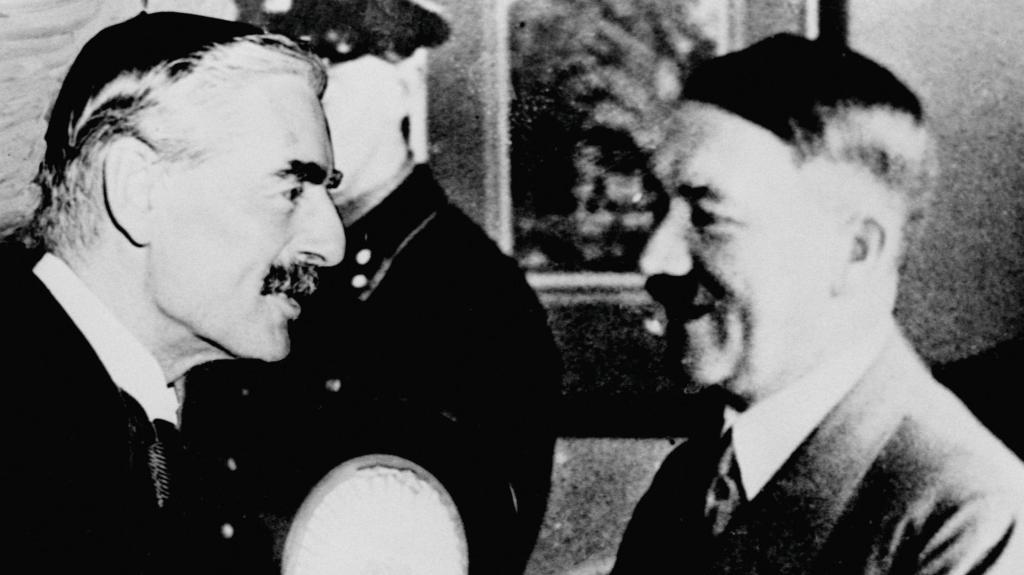
Instead of standing up to the Nazis, British Prime Minister, Neville Chamberlain met with Hitler and agreed that the Sudetenland should be handed over to Germany.
Chamberlain was an honourable man and he was desperate to avoid a second global conflict in two decades.
But in appeasing Hitler he achieved the exact opposite. Having been given an inch, the Nazis went on to take a metaphorical mile, marching into the rest of Czechoslovakia the following year, and then into Poland, sparking the Second World War. Lesson from history: Appeasement doesn’t work.
Fast-forward to February, 2014. Russia invaded the Crimean Peninsula, part of the sovereign nation of Ukraine, formally incorporating the territory into the Russian Federation a month later. The west’s response was condemnation and a package of sanctions, often imposed half-heartedly and thus to limited effect.
Emboldened by the feeble response, on 24 February, 2022, Putin launched his “special military operation” to invade Ukraine. Does anyone see a pattern here?
Once again, the west’s response was words and sanctions, followed, eventually, by the provision of military support packages, which have included intelligence-sharing, training, weapon systems, ammunition, tanks and aircraft.
This military aid has undoubtedly enabled the Ukrainian armed forces to resist the Russian onslaught.
But, every time President Zalensky has asked us to go further, we have vacillated in the face of Putin’s threats to escalate the conflict, threatening Ukraine’s neighbours and reminding us that he has a formidable nuclear arsenal.
In my view, this is all about strategic messaging.
By dithering and delaying our decisions, the message we are sending to Putin is that his threats work. They make us think again. They hold back decisions and the delivery of much-needed weapons and equipment. They give Russia more time to hammer away at Ukrainian towns and cities and possibly force a peace deal.
On the other hand, Putin talks tough but then fails to act. When the west said it was thinking about providing Ukraine with heavy artillery pieces, the Russian dictator said this was a red line. When we talked about providing tanks, he said this was another red line. When the US and other NATO countries considered providing F16 fighters, Putin reminded us that he was a nuclear power. Faced with the possibility of the UK lifting restrictions on our Storm Shadow missiles to allow Ukraine to use them to strike targets deep inside enemy territory, he has made the same threat.
And yet, when we finally plucked up the courage to provide guns, tanks and aircraft, the Russian leader did nothing. So, the strategic message he is sending is that he is not prepared to risk widening the conflict by lashing out at NATO allies in the region, but he is prepared to continue to cause more death and destruction in Ukraine, whatever the rest of the world may think.
As British General, John McColl, a former NATO DSACEUR, said recently, Ukraine is neither winning nor losing the war. The same is true for Russia.
Providing the west continues to provide support, that state will continue for the foreseeable future. As things currently stand, there is unlikely to be a clear winner and loser. If the conflict is to end, it will have to be by negotiated settlement.
Putin may be a megalomaniac and a dictator, but he is not stupid. He will have concluded that he made a massive miscalculation when he ordered his tanks to roll over the Ukrainian border in 2022 and he now he needs to find a way to climb out of the pickle jar without getting too much mess on his face.
His obvious escape route is the US presidential elections in November. Putin will be hoping that if Donald Trump is returned to the White House he will force President Zalensky to the negotiating table and into accepting a settlement that allows Putin to keep some or all of the Ukrainian territory he currently holds. In the face of an American threat to cease all military aid, Zalensky may have no option but to accept those terms, no matter how unfair, unreasonable, or politically impossible they may be to him.
But if Trump was to be re-elected and if he chose to force an unreasonable settlement on Ukraine, the subliminal message to Russia is that aggression works.
Such a course is fraught with risk for the west. It will embolden Putin, encouraging him to think the west is weak and disinclined to take the steps necessary to prevent him from achieving his territorial ambitions, based on his questionable version of history. It will also provide him with an opportunity to re-arm, rebuild his depleted armed forces. How long, then, before he decides to renew his conquest?
Describing appeasers, Winston Churchill said: “Each one hopes that if he feeds the crocodile enough, the crocodile will eat him last.”
America and the UK have a limited window to get their strategic messaging right, avoid the mistakes of 1938 and 1939, and ensure we do not end up as crocodile food.
The unrestricted use of Storm Shadow missiles is not going to win the war for Ukraine. But it will send a powerful message. By demonstrating western resolve, and helping Zalensky to take the fight deep into the Russian heartland, there is a possibility – a small one – that it will bring the consequences of their illegal war closer to the Russian people and add pressure on Putin to seek a deal now.
But it may already be too late. That snapping sound you can hear is the crocodile…and he’s getting closer.
A free media is essential to our democracy…
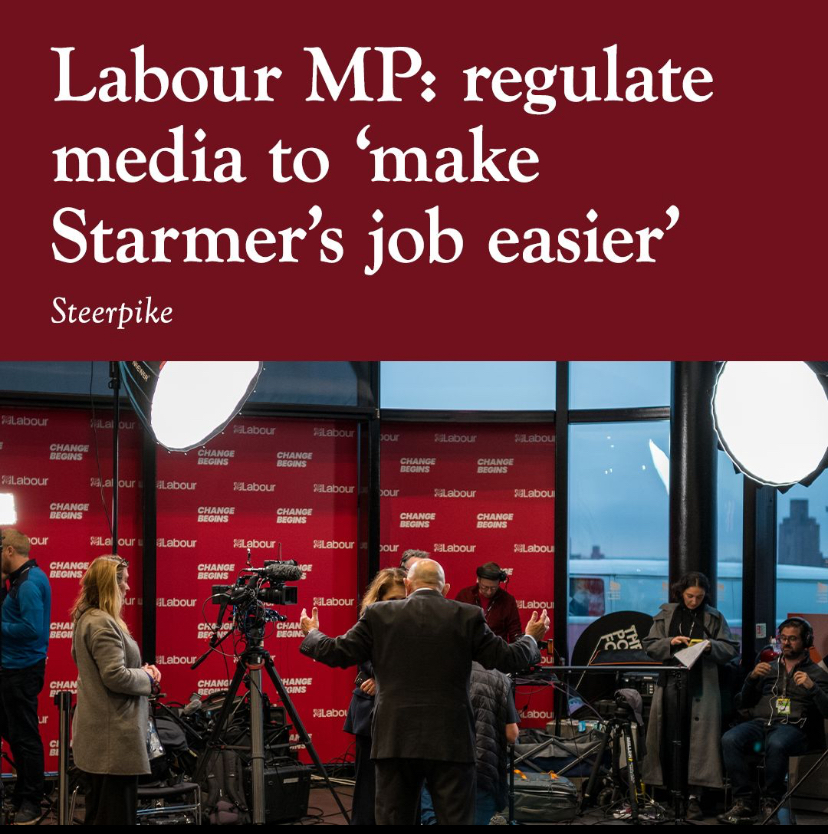
25 September, 2024. So, according to The Spectator, the Labour MP for Clapham and Brixton Hill, one Bell Ribeiro-Addy, thinks all her party’s woes could be solved if only the media were properly regulated. Read it for yourself here.
Speaking at a fringe event in Liverpool, she apparently said:
“It’s in the Labour Party’s interest and in the Labour movement’s long-term interest to regulate the media properly instead of making short term pacts and truces – and if it’s done right media reform could actually make Keir Starmer’s job a lot easier, and effective media reforms would make effective government much easier.”
When I first read these words, which could suggest encouragement for a government clamp-down on media freedom, I was inclined to dismiss them as the usual far-left claptrap that is spewed out at Conference fringe meetings: the sort of stuff that raises a cheer from the quasi-communist wing of the Labour Party, but would never make it through the National Policy Forum of any sane, democratic political organisation.
But then I read the text of Keir Starmer’s conference speech, in which the word ‘control’ appeared 13 times. At last year’s party conference, when he had an election to win and an electorate to hood-wink, Starmer was all about how politics should “tread lightly on people’s lives”. This year, he is asserting that people want “more control…”.
Suddenly, the idea of political restrictions on media output didn’t seem quite so unlikely under a Labour Government. After all, if they are prepared to incur the wrath of the people by cutting the Winter Fuel Allowance to all but a few of the poorest in society, and denying it to millions whose income is just above the cut-off point, why wouldn’t they be up for taking on the media?
Freedom is not free. It comes with responsibilities. And sometimes our media outlets forget that important point. They take sides and play favourites. They often lack objectivity and proportionality. They get things wrong and are reluctant to admit their errors. They distort or block government’s messaging in favour of their own narratives. And they like to think they hold our politicians to account, on behalf of a grateful nation. Perhaps they do.
But on the other hand, they champion important causes and force organisations and governments to change tack, usually for the better. They stand up for the little people against bullying corporate or state giants. They can make us laugh or cry, or do both at the same time, as they expose human weaknesses and strengths, personal tragedies and triumphs. They write the first draft of history, although, like all first drafts, their accounts may be subject to later revision. But at least they were there when history was being made.
Those of us who have had to work with them over the years can testify that the mainstream media can be a right royal pain in the rear. Politicians’ frustrations are understandable.
But the answer is not more regulation. The solution is for government to raise its communications game. That means developing a better understanding of the beast they are dealing with, what makes it tick, the best way to get it to roll over for a belly-scratch, and how to feed it without losing their fingers. In other words, they need to work out how to work more effectively to achieve mutual benefits, accepting that the beast keeps all its teeth and may still bite from time to time. It is that freedom to gnaw at the hand that feeds it that ensures credibility and makes the media such an important institution and such a powerful communications tool.
For all their faults and transgressions, it is surely better to live in a society where journalists are free to challenge and criticise those in power, rather than, for example, in Putin’s Russia, where media outlets are obliged to tell only the State’s version of the “truth” and the people are fed a constant diet of propaganda soup?
The death of local democracy
23 September, 2024. Local democracy will soon be dead and buried. The final nail in the coffin will be Deputy Prime Minister, Angela Rayner’s proposed National Planning Policy Framework, which, if adopted, will mean local councillors will have no real say in how they plan to meet housing need in their areas.
And as a result, the rural landscape of southern England will be ravaged by Rayner’s house-building obsession and in many places our “green and pleasant land” will disappear under a mantle of bricks and mortar – changed forever at the whim of Whitehall.
There is a need for more house-building, but the burden of this, in terms of its impact on our green spaces, should be shared across the country equally – not forced on the south-east, in areas where people may have a different political outlook from the party in Government.
Large tracts of the north are suffering from housing market failure, mainly as a result of poor economic performance. There is no work so there is no demand for housing. Street after street of dwellings stand vacant, falling into disrepair.
If Rayner really wants to make a difference she should join forces with her colleague, Jonathan Reynolds, the Business Secretary, to spread prosperity beyond the south-east, and help to address the failures that have turned previously vibrant communities into wastelands.
In Buckinghamshire this week, the Conservative group on the council put forward a motion accusing the Deputy Prime Minister of bringing forward proposals that would deliberately transfer housing targets from areas with a Labour majority, such as Luton and Slough to Conservative areas such as Bucks.
At the same time, the Council’s Cabinet agreed the text of a formal response to the proposed National Planning Policy Framework, pointing out the following:
- The proposed changes to the way in which local housing need was to be calculated, would lead to a 42% increase in the figure for Buckinghamshire;
- The proposed changes to Green Belt policy, particularly a new definition of ‘grey belt’ land had the potential to lead to large-scale sporadic developments across a wide area of the Buckinghamshire Green Belt;
- The proposed changes to the requirements relating to maintaining a five year supply of housing land were likely to lead to more speculative planning applications being granted permission; and
- The lack of a strategic approach to funding and providing essential local infrastructure when existing facilities were already overwhelmed.
Of these, perhaps the two biggest issues are the effect of the new proposals for calculating housing need, and the lack of essential local infrastructure to support the corresponding increase in population.
The Government’s approach will increase the mandatory housing target for the county from 61,152 dwellings to 86,562 houses by 2045. Where are the roads, the schools, the GP surgeries, the hospital beds, the school places that will be needed to cope with the people who will live in these new houses?
In contrast, the mandatory targets for Luton and Slough – both Labour strongholds – have decreased. Do these towns areas have less housing demand than Aylesbury or High Wycombe?
Local authorities have been given until 24 September to respond to the proposals, after which Rayner will publish a final version of her new Planning Policy Framework before the end of the year. Councils will then be required to follow it to the letter. There will be no scope for local flexibility.
Local democracy has been under threat from the actions of successive governments. But this latest raid, which the Government claims is about “fixing the foundations of the economy”, will actually undermine councils and local accountability. There will soon be no point in voting for your local councillor because they will be powerless in the face of increasing regulation from central government.
Playing peace poker with putin
23 September, 2024. As a retired senior military officers pointed out recently, the unrestricted use of the UK’s Storm Shadow long-range missiles will not turn the tide of war in favour of President Zelensky and Ukraine.
That view is undoubtedly correct. But it is also missing the main point.
Ukraine’s ability to use Storm Shadow to prosecute depth targets, is partly symbolic, signifying continuing western support, but also a military necessity that sits at the heart of Zelensky’s plan to settle the conflict on his terms – to deliver a peace deal that he and his nation can live with.
He needs Storm Shadow to demonstrate that the west is still in his corner and prepared to risk Putin’s ire in order to provide support. He also needs it to demonstrate to Russian people who may think they are safe, well behind the fighting front, that he has the means to give them a taste of what Ukrainians have been living with for over two years.
Of course, any agreement on the use of the missiles is bound to include a clause that prevents them from being used to directly target civilians. However, by taking out military targets well inside Russian territory, in places the local inhabitants thought were relatively safe, he could ramp up public disquiet about how the Kremlin is prosecuting the conflict.
But mostly he needs our long-range weapons to help him to hold on to the Kursk bulge.
As Russia began a counter-offensive in Kursk, Zelensky said recently (Washington Post): “Anyone who simply looks at the map and sees where Russia is launching strikes, where it is preparing forces and holding reserves, where its military facilities are located, and what logistics it uses — anyone who sees all of this clearly understands why Ukraine needs long-range capabilities.”
Although Ukrainian generals undoubtedly hoped the Kursk attack would help to relieve pressure further south in Donetsk by forcing Russia to redeploy resources to halt the advance, it is becoming clear that the real strategic objective was to create a bargaining chip that Zelensky can use when he eventually sits down to play peace poker with Putin.
Zelensky is nobody’s fool. He knows, that even with western backing, it is almost impossible for him to achieve an outright military victory. Peace, when it comes, will be the result of a negotiation rather than the defeat of Russia on the battlefield.
The worst-case scenario for the Ukrainian leader right now is that Donald Trump wins the US Presidential election in November, stops the flow of American arms and ammunition, and forces Ukraine to accept a humiliating armistice pending a final settlement.
If that happened, it is certain that Putin would demand to keep what he holds. That would be personally and politically impossible for Zelensky and without the Russian territory he has captured at Kursk, he would have little to trade. So, he needs to hold on to it until he is able to look Putin in the eye across the negotiating table.
Zelensky has developed a four-point peace plan that he intends brief to Whitehouse hopefuls, Harris and Trump when he attends the UN General Assembly in New York later this month. The world will be watching with bated breath.
But in the meantime, the UK and the USA must give him the go-ahead to use Storm Shadow, and, ideally, ATACMS too.
Subscribe
Enter your email below to receive updates.
 As I See It...