

Defence Policy
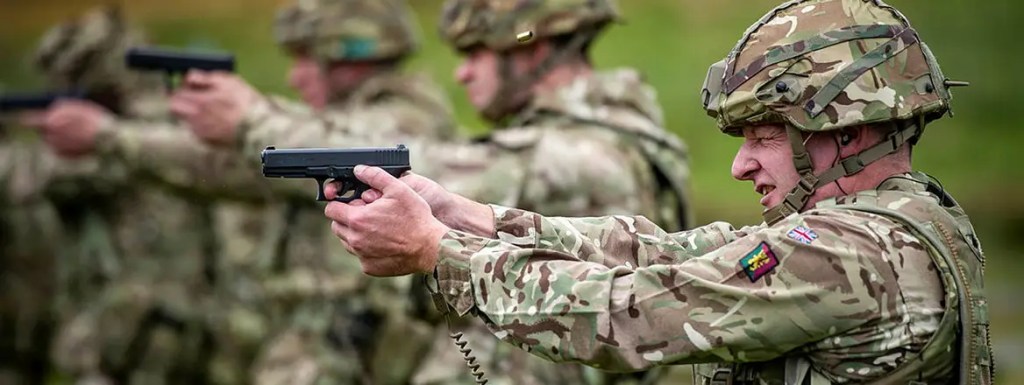
SDR25 and the British Army…
Keir Starmer’s Strategic Defence Review (SDR) is unlikely to result in a significantly larger army.
And yet, while our senior military leaders tell us we are living in “extraordinarily dangerous times”, with growing threats from Russia, China and Iran, the UK’s interests at home and abroad are currently defended by the smallest army since the decades following the end of the Napoleonic Wars – 81,000 in 1819 versus fewer than 72,000 today.
The force is so small, and under-recruited, that the influential House of Lords International Relations and Defence Committee warned recently that it might not be able to make its expected contribution to collective defence as part of NATO.
A former CDS, General Sir Nick Carter, believes the army “has fallen below critical mass”, while academic, Dr Marc DeVore (University of St Andrews), argues that it is “too small and inadequately set up for large, prolonged conflicts like the one in Ukraine”.
Even the Defence Secretary, John Healey, has admitted that the military is “not ready to fight” (Daily Telegraph, 25 October, 2024, p1).
That is a very worrying state of affairs.
The obvious answer is for Labour to commit to expanding the regular Army so that it can take its rightful place alongside our NATO allies, providing an effective antidote against the threats posed by the likes of Putin, the Chinese Communist Party, or Iran’s Ayatollahs.
But that seems unlikely. Recent Labour administrations have been notoriously parsimonious when it comes to spending on Defence, preferring to strip money out of the military to feed their historic hobby-horses of health, education and social security (which are also important, of course).
So, if the cost of expanding the regular force is considered unaffordable, perhaps the time is right to revisit the Army Reserve proposition, as a less costly means of plugging the gaps and allowing the UK to hold its head up alongside NATO allies.
An (un)Informed Prediction…
Having gazed deeply into my crystal ball, I predict that the SDR will mandate the following:
- The Army will not increase greatly in size, but there will be a new drive on recruitment and retention to try to achieve its establishment number and keep it there.
- Technology will replace mass – more drones, more digitisation, more cyber, wider use of AI.
- Acceleration of the modernisation of fighting systems, but a recognition that this will take some time to complete.
- In the short-to-medium-term, relying on a hybrid approach in which old kit will be super-charged by the application of new software. This, together with the introduction of new doctrine, will, it will be claimed, increase lethality and boost fighting power.
- The Defence Planning Assumptions may be tweaked to reflect the reality of the force size – but that doesn’t mean the politicians will stick to them.
- Defence real estate to be sold off to help fill the MOD’s depleted bank account, and to help Deputy Prime Minister, Angela Rayner’s house-building drive, potentially making it more difficult for the Army to conduct field training and thus ensure readiness for whatever challenge may be around the corner.
None of these potential outcomes seems particularly edifying, but the top three should be setting public alarm bells ringing. And the reason is simple…look at what is going on in Ukraine.
In the two-and-a-half years since Putin launched his illegal “special military operation”, Russia has fielded a force that has climbed to a total of 410,000 and aspires to increase this to 1.5m. At the same time, according to UK sources, it has endured casualties of more than 500,000, with a fatality rate of up to 20%. Ukraine has admitted to 30,000 military dead, and the total number of casualties has been estimated by some observers to be about a third of Russia’s, or c.170,000. This is the reality of modern, industrially-enabled, high-intensity warfare.
Despite these worrying statistics, however, if you are a member of the club that believes mass still matters on the modern battlefield, or if you take the view that Britain’s Army needs a significant uplift in numbers to ensure it is able to deliver on its key outputs – you might want to look away now. That pass has already been sold.
It’s mass, Jim, but not as we have known it…
According to the UK Chief of Defence Staff, Admiral Sir Tony Radakin and Chief of the General Staff, General Sir Roly Walker, we are no longer in the “mass” business, except as part of the NATO alliance.
So, instead of increasing troop numbers, it seems much more likely that the SDR will call for a speeding up the modernisation of our fighting systems (equipment) programme; a drive towards greater digitisation; more offensive and defensive cyber capability; greater connectivity and inter-operability with allies; wider use of Artificial Intelligence; and more drones… lots more drones. In the British Army of the not-so-distant future, tech will take the place of mass.
And all of this will be underpinned by the implementation of new doctrine that is designed to drive how we fight – helping to lever more and bigger bangs for the tax pound.
Will this be enough to ensure we have an Army that is capable of playing its part in a future conflict against a serious foe? There are many who think not.
SDR25 has only just got under way, and is not due to be published for many months yet, so it is difficult to divine the final outcomes with any certainty at this stage. A lot of water will flow under Westminster Bridge, and much hot air will waft through the corridors of power at Main Building, King Charles Street, and Downing Street, before the final plan is revealed, sometime ahead of Parliament rising for the Summer Recess next year.
But let’s apply the military planners’ trick of using what we know to try to work out what we don’t…
Geopolitical wallpaper…
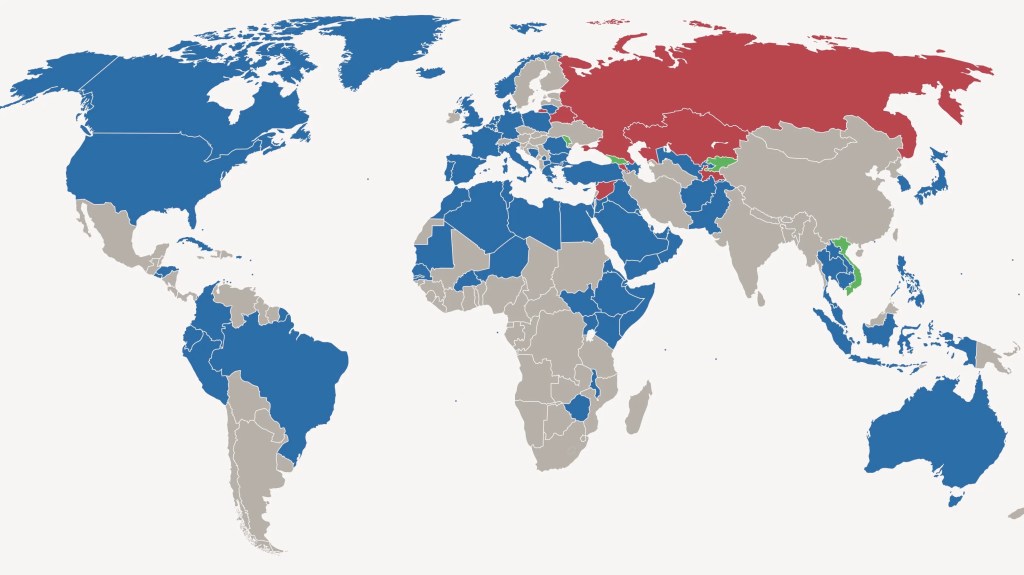
We have a good understanding of the geopolitical backdrop against which the Review is being conducted.
Obviously, the conflict in Ukraine looms large in any current security assessment. But we should not forget that China has demonstrated a willingness to use all the levers of state power to make its presence felt in global affairs. Iran and North Korea also continue to exhibit destabilising behaviours.
As this analysis was being written, Ken McCallum, the head of MI5, the UK’s domestic security service, was warning that Russia, China and Iran all posed significant threats to the nation’s security and economic interests at home and abroad.
A practical and current example of this is the worsening situation in the Middle East, where Iran is using her proxy terrorist organisations, Hamas and Hezbollah to ferment trouble with Israel, destabilising the strategically-important region and beyond. At the same time, China recently surrounded Taiwan with naval and air assets, in what the PLA claimed was a “punishment” after the island’s new president vowed to defend democracy.
Another nuclear power, North Korea, in what appears to be a potentially serious and significant escalation of the fighting in Ukraine, looks to have sent a contingent of troops to add to its supply of weapons and ammunition bolstering Putin’s campaign.
But lest we become too fixated on state-on-state threats, it is as well to remind ourselves that international terrorism has not gone away.
Although Al Qaeda’s activities have been pegged back by the assassination of Osama Bin Laden and his successor, Ayman al-Zaawahiri, its affiliate, ISIS, appears to be once more on the rise, despite similar leadership losses.
According to the US Director of National Intelligence’s Annual Threat Assessment, published in February this year, ISIS remains a global organisation, focused on attempting to conduct and inspire attacks against the West and Western interests worldwide. It is particularly active in Africa and is attempting to gain a foothold in Afghanistan, hoping to use it as a base from which to launch international attacks.
Small wonder then, in the face of all these potential threats, that Chief of Defence Staff, Admiral Sir Tony Radakin, has described the security outlook as “extraordinarily dangerous”.
Addressing Chatham House back in February, he noted that a strategic shift was under way. The war in Ukraine, which had ushered in a new era of state-on-state competition and global volatility, was, in turn, “driving careful reconsideration of many of the assumptions of the past three decades” (Text of CDS’s speech).
In plain language that means Britain’s previous approach – focused not on the threat of a significant conventional war on the European land-mass, but on having to deal with international terrorism, domestic resilience, protecting our overseas interests if required, and providing a contribution to collective deterrence through NATO – is no longer valid.
The previous government sought to address this shift by conducting a “refresh” of its 2021 Integrated Review. Among other things, this concluded that the period of heightened risk and volatility was likely to last to beyond the 2030s, and demanded that we “analyse, learn from and adapt to the changing nature of warfare, notably in the land domain” (IR23, p8).
The SDR will develop this approach by seeking to “determine the roles, capabilities and reforms required by UK Defence to meet the challenges, threats and opportunities of the twenty-first century…”(SDR Terms of Reference).
SDR25 – A Different Approach…
We have been told that this review will be different from its predecessors. It will not be a cost-cutting exercise but a genuine attempt to match military structures and capability with our home and foreign policy objectives. Yes, I know, we’ve heard that before…

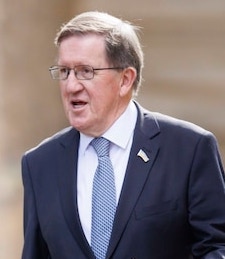
It will also be different in terms of how it is conducted. Although the Prime Minister has charged Defence Secretary, John Healey, with overseeing the work, the heavy lifting will be led by a trio of external reviewers. These include Tony Blair’s first Defence Secretary and later Secretary General of NATO, Lord Robertson of Port Ellen; high-flying foreign affairs guru and academic, Dr Fiona Hill; and retired General, Sir Richard Barrons.
To make sure they don’t go rogue, this heavyweight triumvirate will be supported by a secretariat provided by the MOD. Initial recommendations are scheduled to be produced by the first half of 2025.
The speed with which the Review and the team was announced, less than two weeks after the 4 July election, suggests that this was all carefully planned well in advance.
It is good news that General Barrons has been appointed to the team. A gunner by trade, he is not only a highly-experienced and much-respected soldier, but well-qualified academically, having studied PPE at Queen’s College, Oxford, and picked up a Masters in Defence Administration along the way. He is a former Chief of Staff of the Allied Rapid Reaction Corps, so he knows all about combined (multi-national) and joint (multi-Service) operations. As Assistant Chief of the General Staff he was closely involved in making the Army’s case during the 2010 Strategic Defence and Security Review, under the Tory-LibDem coalition.
His final military job, leading Joint Force Command (now renamed Strategic Command) will have ensured his familiarity with all three of the Armed Forces and the supporting Civil Service as well as cyber and electromagnetic spectrum operations, all areas that are likely to come under close scrutiny as the review moves forward.
Barrons will bring high-level military knowledge and intellectual rigor to the process and, hopefully, ensure that the end result is militarily coherent. On the other hand, his bullsh*t antenna will be finely tuned and sensitive to any attempts on the part of the MOD to hoodwink, obfuscate or bamboozle. He will tell it like it is and he will expect others to do the same. Few will dare to argue with him. He will infuse the end result with military respectability. His appointment is a masterstroke by Labour.
Fiona Hill, the daughter of a coal miner from Bishop Auckland, has impeccable Labour credentials, riding the social mobility bus from “from the coalhouse to the White House”, as she likes to put it. With a PhD in history from Harvard, she is a well-connected senior academic whose CV includes serving in intelligence roles under US Presidents Bush (the younger) and Obama. She was also Deputy Assistant to the President (Trump) and senior director for European and Russian affairs on the National Security Council staff for two years from 2017.
Her appointment is prima facie evidence that Prime Minister Starmer wants to try to ensure that the review is strongly anchored in foreign policy objectives, with a particular focus on the dangers flowing from Russian expansionism. Hill has an impressive pedigree in this area. Her doctoral thesis was ‘In search of great Russia: elites, ideas, power, the state, and the pre-revolutionary past in the new Russia, 1991–1996)’ and she co-authored ‘Mr Putin: Operative in the Kremlin’.
In addition, her time in the US means she knows many of the movers and shakers in Washington, and she will have a good feel for how the UK’s most important ally is likely to react as the various options are considered. She will be a key force in ensuring military enthusiasm for “big boys’ toys” is properly balanced by a sober assessment of the threat and rigorously maintaining the link to foreign policy.
Lord Robertson led Tony Blair’s first Strategic Defence Review, back in 1998, although much of the day-to-day trench warfare with HMT was conducted by Blair’s semi-tame attack-dog, former communist, John Reid, who was Minister for the Armed Forces at that time.
Robertson later led NATO to its first decision to act under Article 5 of the Atlantic Charter (mutual defence) in the aftermath of the 9/11 attacks on the US in 2001. He oversaw the modernisation of the Alliance in the wake of the Cold War and the rise of the international terrorism threat.
In contrast to previous attempts to produce a long-term plan for Defence, which had tended to be dominated by the Treasury’s cost-cutting zeal rather than new investment, in 1998 Robertson was supposed to preside over a foreign-policy-based review, designed to deliver what the country needed rather than what the Treasury was prepared to bank-roll.
But neither he, nor Rottweiler Reid, nor the Foreign Secretary, Robin Cook, nor, indeed, their boss, carried sufficient political weight with Chancellor, Gordon Brown and his tightwad Treasury officials, who were far more focused on finding money for health, social security, education.
The original objective was lost in last minute wrangles with the bean-counters on the other side of Whitehall, which led to swinging cuts to the proposed budget and major ruptures in future equipment programmes. Publication was delayed by more than six months.
Given that experience, it is to be hoped that, this time around, Robertson has sought, and been given, some sort of undertaking that the work will not be red-penned by the Chancellor.
That is unlikely, however, because…
There is no money!
The noises coming from Government suggest that cash will be in short supply, certainly in the early years of any new Defence strategy. Given its track record, Defence is unlikely to escape the long hand and sharp knife of His Majesty’s Treasury as it seeks to balance the books, while political priorities continue to point towards the big, potentially vote-winning, areas of health, social care, education and crime.
According to some, Chancellor Rachael Reeves has a c.£22bn black hole to fill, and she has threatened to fix the fiscal deficit by a combination of tax rises and savings. Defence Secretary, John Healey, has already signalled that MOD will have to play its part in helping to balance the books. That latter point probably means in-year and longer-term savings. A recent newspaper article suggested that the Treasury was calling for cuts in Defence infrastructure projects over the next 18 months. (Guardian, 2 October, 2024).
Meanwhile, Defence has a black hole all of its own.

The National Audit Office Report on the MOD’s Equipment Plan out to 2033, published at the end of 2023, concluded that the cost was unaffordable and the Department was facing the largest budget deficit since the Plan was first unveiled in 2021. Forecast costs exceeded the current budget by £16.9bn. Only the Army had not shown an increased deficit, although this was because it had only included forecast costs that it could afford, accepting greater risk that its capabilities would fail to meet Government objectives. See NAO Press Release.
Labour has promised to spend 2.5 per cent of GDP on Defence, up from about 2.3% under the previous government. So far, however, they have refused to put any timescale on that, declaring only that it will be “as soon as resources allow”. Min(AF), Luke Pollard, laid down an additional smokescreen by suggesting that Defence spending would be dependent on economic growth. Speaking on BBC Radio 4’s Today programme, Pollard stated:
“The way we deliver increased public spending on defence, on schools, hospitals or prisons, is by growing our economy. If we don’t grow our economy, there won’t be the money to support those public services and the ambitions that we have – and that includes defence.” (Radio 4 Today Programme, 10 July, 2024).
Given their track record on promises, and Pollard’s qualification about economic growth, 2.5% could be a long time coming and may never arrive at all, certainly not within this parliament. Perhaps the October Budget Statement will provide an indication – but don’t hold your breath. It is more likely that we will have to wait for the outcome of the Spending Review, not due until the Spring, to find out how Defence will fare under the Starmer-Reeves axis.
Recent pronouncements…
What can we take from the recent pronouncements of key Defence personalities that might help us to understand the likely direction of travel?
Keynote speeches by two of the MOD’s most senior military people – CDS and CGS – at the Royal United Service Institute (RUSI)’s Land Warfare Conference in July, are instructive.
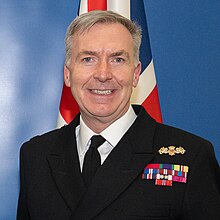
CDS, Admiral Radakin, believes the key lesson from the Ukraine conflict is that the UK’s security is based not on mass, tactics or technology, but on membership of NATO and our status as a nuclear power.
Referring to the threat of war against Russia, he pointed out that the UK would only ever fight that country as part of the North Atlantic alliance, which outmatches Russia by roughly three-to-one in terms of military personnel, and also in terms of tanks, armoured vehicles, fast jets and submarines.
He also noted, no doubt intending to be reassuring, that even if the fighting in Ukraine ended tomorrow, it would take Russia five years to reconstitute its armed forces back to the levels of February, 2022 (before the Ukraine invasion), and a further five years to rectify the weaknesses the recent fighting has revealed.
Although he sees NATO as the Army’s “strategic anchor” (reminding us of his maritime lineage), he stops short of suggesting that it should follow the lead of other member states. For example, Poland is planning to double the size of its army. Since we do not share a land border with Russia, Radakin concludes that we are not so vulnerable to a land attack, ergo we do not need a bigger army.
Our main vulnerability, he suggests (perhaps unsurprisingly, given the colour of his uniform), is our dependency on sea lines of communication and this, he believes, should shape our role in Nato. So, a bigger, stronger navy to protect our vital sea routes while the army remains the smallest we have fielded in over 200 years?
The most important factor in dictating the size of our land forces, according to CDS, is to meet SACEUR’s demand for an Army that is “not larger, but more lethal, more mobile, more available, organised to advance, react and respond at Division and Corps level, and equipped to strike harder, faster and deeper”.
We do not actually have a Corps, of course, and have not fielded one since the demise of 1(BR) Corps in 1992. We do, however, remain the framework nation for the NATO Allied Rapid Reaction Corps. This takes the form of a standing headquarters, based at Innsworth, near Gloucester, but is reliant on the Alliance’s troop-contributing nations to provide its fighting troops and equipment. It has no permanently-assigned formations.
In CDS’s vision, the British Army will be equipped, not with more people, but with new hypersonic missiles and “battalions of one-way attack drones”.
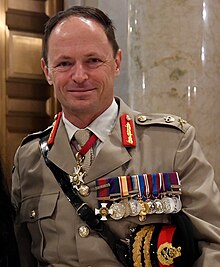
Chief of the General Staff, General Sir Roly Walker, has his steely, ex-Special Forces gaze firmly focused on fighting power, which he believes he can double in three years and triple by the end of the decade. By achieving this, he says, the Army will be able to take on, and defeat, a force at least three times its size.
But not by driving up manpower.
Fighting power, as every Sandhurst and Staff College student will know, is the product of the moral, conceptual and physical components of a military force. CGS appears to be fixed on the last two.
Like CDS, Walker believes that the “big Army” concept is outdated, and that raw numbers no longer determine fighting power. He thinks the long-term answer lies partly in modernising our main fighting systems, but that will take time. In the short-term, he advocates adopting a hybrid approach – a mixture of the old and the new, a combination of new thinking, old hardware, and some “secret-sauce software” (his words), which together, he claims, can deliver devastating lethality now.
In this model, technology, new thinking, and new digital code, designed to increase the efficiency of hardware, can take the place of mass.
Not everyone goes along with this assessment.
In a parting shot, as he stood down as Walker’s predecessor, back in January this year, General Sir Patrick Sanders said the Army must urgently be expanded to around 120,000 within three years – a clear signal, from someone who knows, that the force has been reduced too far and now needs to be re-built.
Giving evidence to the House of Lords International Relations and Defence Committee, Dr Peter Roberts, a Senior Fellow at the Centre for Public Understanding of Defence and Society at Exeter University, pointed out that mass remained important. “Mass…is as important for manoeuvre as it is for any other military strategy you try to make. The idea that somehow you can get around this requirement for mass…goes against what we know from history.”
In a drawn-out conflict, mass would also be key to ensuring that the UK is able to field follow-on fighting forces, whilst, concurrently, protecting our critical national infrastructure, and safeguarding the logistic chain from the home base to deployed troops.
Ben Wallace, a previous Defence Secretary, who presided over the falling numbers for four years, has described the Army, and indeed, the whole of the Armed Forces, as “hollowed-out” after 30 years of under-investment.
What should we conclude from this?
First, it seems clear that unless circumstances change, or someone senior suddenly decides to rock the boat and put their peerage at risk (if that’s not too cynical), there will be no more soldiers. It is obvious, from what they have said, that neither CDS nor the head of the army will be arguing for a significant up-tick in troop numbers.
To put that into context, setting the bar for the size of the army at the current level means the UK is accepting that we will not deliver a land force into a major conflict at greater than a single division in scale, and it will take several years yet before we can do that.
Even then, such a force, if required on an enduring basis, would place a heavy burden on the system to maintain. And not just the military system, but industry’s ability to supply the weapons, ammunition and equipment that such a conflict would require.
But the picture gets worse. Under plans outlined by the previous government, the size of the Army is due to fall to just 73,000 – a number that could easily fit inside London’s Wembley Stadium, together with most of the Army Reserve.
When we were engaged in post-invasion Iraq and in Afghanistan, two medium-scale enduring operations to which we initially contributed a brigade-plus of fighting troops, together with command-and-control elements and support personnel to each theatre, the pressure on the army became almost unbearable, particularly among key enablers such as engineers, signallers and intelligence soldiers.
Committing a single Brigade of three infantry battalions, artillery, combat support (engineers, intelligence, signals etc) and combat service support (logistics, medical, REME etc) elements, tied up three formations for each six-month cycle. That’s one in theatre, one recovering from being in theatre, and a third preparing to go. Or a minimum of 12 brigades every 12 months to service both operations.
As the Chief of the General Staff, General Sir Richard Dannatt, put it at the time, that level of demand was causing the army to “run hot”. Harmony rules, designed to limit the amount of time individual soldiers had to spend away from home, were consistently broken, morale and retention suffered as a result.
And that was with a regular force of over 100,000. On 1 July this year, the trained strength (phase 1 only) of the full-time army stood at 71,370, and today, following the Future Soldier changes, the UK can field the equivalent of only eight infantry brigades, now called Brigade Combat Teams.
Let’s hope, then, that we are not faced, in the future, with having to conduct a re-run of, say, Op CORPORATE (Falkland Islands, 1982) whilst, at the same time, contributing to collective defence in Eastern Europe. In 1982 the size of the army stood at 163,000 (including the standing commitment to Op Banner (Northern Ireland), which required 20,000 troops at its peak).
Second, the army we appear to be settling for will have only limited resilience. In many cases it will be little more than “one-deep”. As Defence academic, Michael Clarke, has said, a force of c.80,000 would only be sufficient to field a single fighting division, leaving little capacity to do anything else.
That may be an acceptable state of affairs in peacetime, but if we find ourselves in a shooting war against a serious opponent such as the Russian Federation, or China, there will be very little in the way of reserve capacity – people and kit – to replace troops and materiel lost in combat.
Much of our national stockpile of ammunition has been sent to Ukraine. In peacetime, this can be replenished over time, of course, but UK industry may not have the capacity to meet the demands of high-intensity conflict.
The defence industry is not prepared for long-term war. Our industrial base has “atrophied” in the aftermath of the Cold War. In the event of a large-scale conflict in the near future, we could find ourselves facing a supply crisis on a par with the “shell scandal” that cost Liberal Prime, Herbert Asquith, his job in the aftermath of the ill-fated Battle of Neuve Chapelle of 1915.
Collective mass may look good on a NATO TO&E (Table of Organisation and Equipment), but we will surely still require some national depth in order to make good combat losses, particularly in a protracted conflict, such as we are seeing in Ukraine?
Perhaps part of the problem is that we still tend to see future conflicts through the prism of the recent past.
During Operation Telic in Iraq, between March 2003 and 2009 the British military suffered 179 fatalities, 136 of these due to hostile action. In Operation Herrick, in Afghanistan, between 2003 and 2014, losses totalled 454, of which 405 were due to enemy attacks.
Contrast those numbers with the casualties in Ukraine since 2022. In June this year, the UK Defence Journal, quoting British military sources, estimated that Russia had lost about 500,000 killed and wounded in just over two years. President Zelensky has reported that Ukraine’s military fatalities up to February this year were around 31,000.
Although we lost far too many young men and women in our recent experiences in Iraq and Afghanistan, it should be remembered that these conflicts were, at most, medium-scale events, quite different in character from large-scale, high-intensity general war.
However well-trained and well-equipped our military might be, however much “secret sauce” might be applied, high-intensity, conventional warfare, utilising the latest technology and the industrial might of modern economies, is a dirty, bloody business, costly in blood and treasure – far more costly than our most recent military adventures have prepared us for. Even NATO, with 1.3m soldiers under arms, would require reinforcements and follow-on forces to sustain a medium-to-long-term conflict.
CGS, General Walker, appears to be betting the farm on NATO’s strength, which, he says, would be so overwhelming that “no-one would dare to go to war against us”.
But what if we found ourselves up against a megalomaniacal, nuclear-armed nut-job who decided not to play by our rules? In that case, Walker counters, they would be met with such devastating lethality that they would be decisively defeated in the first battle and thus denied a strategy of a quick win.
That could go two ways.
A sensible enemy, one made in our own image, might conclude that the price of continuing to fight would be too great, and back down.
But a different adversary, one who does not conform to our norms, might take the view, based on historical evidence, that many NATO capitals lack the intestinal fortitude for a lengthy, costly fight and thus determine that he can wait them out. As the Taliban used to say, “You might have the watches, but we have the time…”
Remember, General Walker, the enemy always gets a vote, and they may vote to do something you do not expect.
In those circumstances, NATO could find itself in a protracted, expensive slogging match with no appetite to go on meeting the butcher’s bill. Where would that leave the UK and the Alliance?
Third, the Army Reserve (AR), as currently organised, is not capable of providing a significant reinforcing or follow-on capability, such as was envisaged for its predecessor, the Territorial Army, during the Cold War era. From a strength of 90,000 in the 1980s, it now stands at under 30,000. And as well as being smaller, the nature of the force has changed.
The most recent data (July, 2024) show that the actual trained strength was 23,990. That figure is likely to be an over-statement. Historically, units have been reluctant to “strike off strength” non-attenders, as required by the Reserve Land Forces Regulations, preferring to keep them on the books to inflate their manning for cosmetic purposes.
A more accurate measure of true capability would be the number that have claimed pay in the last three months, or those who have achieved a certificate of efficiency in the previous training year. But neither figure is published, presumably for fear of revealing the true state of affairs.
In addition, there is the Ex-Regular Reserve (service personnel who have left regular service but who have a recall liability until the age of 55 years). General Sir Nick Carter, when he was CDS, talked about a “strategic reserve of over 200,000 (all three Services) that could be mobilised at short notice.” He was wrong.
In January this year, Tory Defence Minister, Andrew Murrison, disclosed that there were 22,600 Army regular reservists liable for recall under Section 22 of the Reserve Forces Act, 1996 (training), and a further 55,000 liable under Section 68 of the same Act (national danger, significant emergency or a direct attack on the UK).
Having ignored the Regular Reserve for generations, however, the MOD lacks information about the availability, readiness, current capabilities, or fitness states of those on these lists. Not long ago, the Army did not even hold up-to-date contact information for this cadre. This leaves huge question marks over the practical utility of this group, many of whom will be holding down important roles in UK industry or public services and thus would be difficult to release for military service.
Conscription does not offer a quick fix. Setting aside a lack of political will, we do not have the infrastructure to train, re-train or equip a significant conscript army at speed, should that ever be deemed necessary.
So what?
In the absence of additional funds and any discernible enthusiasm among the great and the good in MOD Main Building or in Army Headquarters at Andover to make the case for a bigger regular army, the Army Reserves should be considered as part of a potential solution – a way of increasing capability – or at least the headcount – whilst keeping the costs manageable.
At a time when money talks, the decision-makers should bear in mind that Reservists are much less expensive than regulars to hold at readiness. The regular gets paid to be available 365 days a year. Once trained, the part-timer is only paid for the days he or she actually serves – around 27 days a year in most cases.
They can, of course, be more expensive to call-out for full-time service. But if we find ourselves in a general war, the cost of reserve mobilisation will be the least of our worries.
If the AR is to be part of the solution, it needs to be bigger and we need to re-think how it fits into the nation’s defence strategy.
During the Cold War reserve units had clearly-defined roles which they were trained to meet. More recently, certainly over the last two decades, resources were focused on the provision of individual reinforcements in support of (or plugging gaps in) regular units deploying on operations, primarily in Iraq and Afghanistan.
The Future Reserves 2020 White Paper, based on the perceived threat at that time, heralded a significant change, mandating a more integrated force that would both provide individuals or small groups of specialists and formed sub-units or units to support operations.
A refresh of Reserves policy, led by former Defence Minister and Army Reservist, Brigadier Lord Mark Lancaster, split the force into three distinct groups:
- Reinforcement. Support for routine defence activity.
- Operational. Support for contingency tasks.
- Strategic. Built around the ex-regular cohort, this group would add depth to contingent capability and support deterrence.
Although Lancaster’s recommendations were published in May, 2021, the previous government – his erstwhile political colleagues – steadfastly refused to respond to them. The man who had commissioned the work, General Sir Nick Carter, then CDS, departed in November of that year, and any high-level enthusiasm for the proposals left with him.
But that need not prevent the SDR from giving the Reserve proposition proper attention, against the backdrop of the updated threat picture and the evolving character of conflict, as part of its wider deliberations.
An expanded AR, properly equipped and trained, and effectively integrated, could provide a very cost-effective solution to mass, national resilience and specialist capability, building new links with civil society, and importing much-needed civilian skills in areas such as cyber, media operations, intelligence, medicine, logistics.
Such an approach would not be without its challenges, not least the apparent lack of appetite for military service among the likely recruiting audience, and, just as importantly, their civilian employers.
Some of this will be down to modern youth’s apparent resistance to the idea of military service. A YouGov poll, published in January, found that 38% of under-40s in the UK would refuse to serve in the Armed Forces in the event of a world war and 30% said they would not serve, even if the nation was facing imminent invasion. Only 7% said they would willingly volunteer to serve in the event of war.
But it may also be the product of a lack of knowledge and understanding of what reserve service means, and how it can enhance civilian employment prospects. This reluctance can be overcome by a careful mix of better marketing, improved terms and conditions, fiscal incentives for employers (eg tax breaks), and better opportunities for training and development.
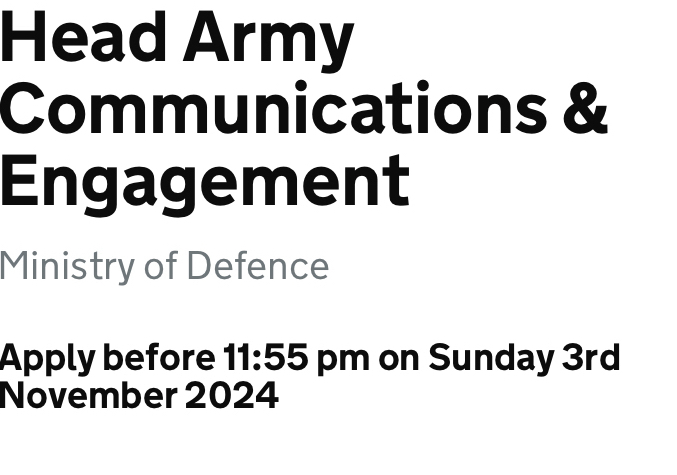
The Army has just advertised to fill the post of Head of Army Communications and Engagement.
In the recent past, this position has been held by a military officer of Brigadier or 1-Star rank, but the Army has decided that it should be civilianised.
There are two main factors driving this.
The first is to save some money. With the MOD under financial pressure, it will be less costly to hire a civil servant than to appoint a military officer. The £76,000 on offer is in the top third of the pay band for a Major, a long way below that of a Brigadier whose salary starts at £127,352. And not much more that that of one of Transport Secretary, Lou Haigh’s train drivers, some of whom are on £70,000.
The second is perhaps a recognition by the Army that it does not have a suitably-qualified regular officer to do the job.
This latter problem is entirely down to the Service’s short-sighted career-management policies, which are stuck in a mid-20th Century mindset. The Army Personnel Centre has consistently refused to consider creating a career stream for media and communications that would allow military personnel, with the right aptitude, to gain the skills and experience necessary to do the job at 1-Star level or above.
I know this, because I wrote a paper suggesting such a reform, back in 2009, in an attempt to drive up operational media and communications outputs on Op Telic and Op Herrick (Iraq and Afghanistan).
This piece of work gained some traction within Main Building, but floundered on the steps of Kentigern House in Glasgow.
The career management organisation, which is based there, was simply not prepared to modernise a system which they considered had served the army well for decades and was designed to deliver individuals who, in addition to expertise within their regimental or corps specialism, know a little bit about a lot of other parts of the machine.
The idea that a clever young officer should spend time developing a second specialism, such as Media Operations, conflicted with their vision of career development. Individuals who had been posted into a Media Ops position, found the experience stimulating, and asked to do second tour in that role, were told that such a move would be a “career foul” and would limit their progression.
The job advert demonstrates perfectly another problem for the Army – failure to give media and communications the importance it deserves not just in the modern battlespace but in the corridors of Main Building and Andover.
Even today, after all we’ve been through in recent conflicts, and the evidence of our own eyes and ears, as we watch events in Ukraine, Israel and Lebanon being played out on our TV screens and on social media channels, many senior officers still pay lip service to Media Ops, whilst, deep down, believing it is a “cinderella” function that can happily be left to any reasonably competent military officer. In their minds, It is certainly not a job into which they would willingly choose to put their brightest and best. And yet, I would argue, that is exactly what is required.
When I last worked in MOD MB, in 2020, the Army Sergeant Major (the most senior enlisted soldier) sat on ECAB (Executive Committee of the Army Board)… but the Head of Army Communications did not.
According to the job summary, the post holder is at the heart of the British Army’s strategic centre. But that cannot be true. The reporting line for the jobholder is through the 2-Star Assistant Chief of the General Staff to CGS and ECAB.
ECAB sits below the Army Board and is the Service’s main policy-making forum. If this post was truly at the strategic heart of the Army, the person filling it would be more senior and have a seat at the ECAB table, where she or he could eyeball the Army’s key leaders and have the opportunity personally to influence Army thinking at the highest level.
The purists will have lots of arguments for why that cannot happen. They will claim that a 1-Star cannot sit on ECAB because no other 1-Stars are members and that it would break the chain-of-command: he/she reports through CGS. And it would be impossible to grade the post at civilian 2-Star level because that would mean it was equal in status with ACGS and the MOD’s Director of Communications.
In the modern world, these old-fashioned distinctions no longer hold good. There is no reason, apart from the MOD’s own entrenched attitudes – and, of course, a lack of willingness to invest properly in the comms function – that there cannot be two or three or four civilian 2-Stars in the Media and Communications field within Defence.
CDS and the single Service Chiefs are all 4-Star officers, but it is well-understood that CDS is in a position of primus inter pares. So why could not a similar arrangement work at 2-Star level in the Media and Communications world, with the MOD Director of Comms being recognised as first among equals and the Department’s champion for the comms profession? Such an arrangement would mean that the post would attract a higher salary (meaning less savings for the bean-counters), carry more weight among the great and good, and thus, the Army might – just might – be able to find someone of the right calibre to do it.
Meanwhile, although the civil servants in Army Comms will welcome the fact that one of their own” is being appointed, there will be some in uniform who will whine that a civilian cannot possibly know enough about the Army to do this job effectively. This will particularly be so if he or she comes from outside the MOD, or, God forbid, from the private sector.
But this view is purblind. While it may be true that an outsider may not have an immediate depth of knowledge or understanding of the military institution, there will be plenty of experts for them to consult. In addition, someone who is not encumbered with the current culture and thinking might bring a fresh pair of eyes and some new thinking to the big challenges being faced by all our military institutions, like, for instance, how to recruit a sufficient number of good people to fill the gaps that exist in the current establishment.
I wish the new incumbent lots of luck. They will need it.
Appeasement – a lesson from history…
24 September, 2024. I study history because I believe it can teach us lessons and help us to avoid the mistakes of the past.
As 20th century Spanish-American philosopher, George Santayana famously said, “Those who cannot remember the past are condemned to repeat it (Santayana, ‘The Life of Reason’, 1905). Speaking in 1948, Churchill famously paraphrased this as “Those that fail to learn from history are doomed to repeat it.”
And yet…when it comes to appeasing bullies and dictators, we seem to struggle to act on the hard-learned lessons of the past.
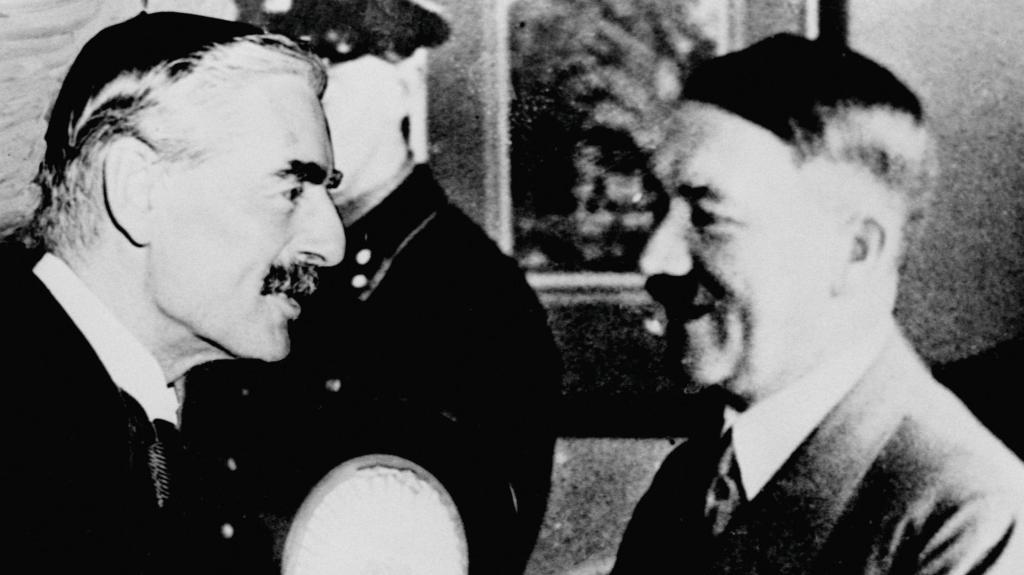
In 1938, emboldened by the bloodless Anschluss of Austria, Hitler next targeted the largely ethnic-German Sudetenland in the south and west of what was then Czechoslovakia, demanding that it should become part of the German Reich.
Instead of standing up to the Nazis, British Prime Minister, Neville Chamberlain met with Hitler and agreed that the Sudetenland should be handed over to Germany.
Chamberlain was an honourable man and he was desperate to avoid a second global conflict in two decades.
But in appeasing Hitler he achieved the exact opposite. Having been given an inch, the Nazis went on to take a metaphorical mile, marching into the rest of Czechoslovakia the following year, and then into Poland, sparking the Second World War. Lesson from history: Appeasement doesn’t work.
Fast-forward to February, 2014. Russia invaded the Crimean Peninsula, part of the sovereign nation of Ukraine, formally incorporating the territory into the Russian Federation a month later. The west’s response was condemnation and a package of sanctions, often imposed half-heartedly and thus to limited effect.
Emboldened by the feeble response, on 24 February, 2022, Putin launched his “special military operation” to invade Ukraine. Does anyone see a pattern here?
Once again, the west’s response was words and sanctions, followed, eventually, by the provision of military support packages, which have included intelligence-sharing, training, weapon systems, ammunition, tanks and aircraft.
This military aid has undoubtedly enabled the Ukrainian armed forces to resist the Russian onslaught.
But, every time President Zalensky has asked us to go further, we have vacillated in the face of Putin’s threats to escalate the conflict, threatening Ukraine’s neighbours and reminding us that he has a formidable nuclear arsenal.
So, what has any of this got to do with Media and Communications?
Well, in my view, this is all about strategic messaging.
By dithering and delaying our decisions, the message we are sending to Putin is that his threats work. They make us think again. They hold back decisions and the delivery of much-needed weapons and equipment. They give Russia more time to hammer away at Ukrainian towns and cities and possibly force a peace deal.
On the other hand, Putin talks tough but then fails to act. When the west said it was thinking about providing Ukraine with heavy artillery pieces, the Russian dictator said this was a red line. When we talked about providing tanks, he said this was another red line. When the US and other NATO countries considered providing F16 fighters, Putin reminded us that he was a nuclear power. Faced with the possibility of the UK lifting restrictions on our Storm Shadow missiles to allow Ukraine to use them to strike targets deep inside enemy territory, he has made the same threat.
And yet, when we finally plucked up the courage to provide guns, tanks and aircraft, the Russian leader did nothing. So, the strategic message he is sending is that he is not prepared to risk widening the conflict by lashing out at NATO allies in the region, but he is prepared to continue to cause more death and destruction in Ukraine, whatever the rest of the world may think.
As British General, John McColl, a former NATO DSACEUR, said recently, Ukraine is neither winning nor losing the war. The same is true for Russia.
Providing the west continues to provide support, that state will continue for the foreseeable future. As things currently stand, there is unlikely to be a clear winner and loser. If the conflict is to end, it will have to be by negotiated settlement.
Putin may be a megalomaniac and a dictator, but he is not stupid. He will have concluded that he made a massive miscalculation when he ordered his tanks to roll over the Ukrainian border in 2022 and he now he needs to find a way to climb out of the pickle jar without getting too much mess on his face.
His obvious escape route is the US presidential elections in November. Putin will be hoping that if Donald Trump is returned to the White House he will force President Zalensky to the negotiating table and into accepting a settlement that allows Putin to keep some or all of the Ukrainian territory he currently holds. In the face of an American threat to cease all military aid, Zalensky may have no option but to accept those terms, no matter how unfair, unreasonable, or politically impossible they may be to him.
But if Trump was to be re-elected and if he chose to force an unreasonable settlement on Ukraine, the subliminal message to Russia is that aggression works.
Such a course is fraught with risk for the west. It will embolden Putin, encouraging him to think the west is weak and unprepared to take the steps necessary to prevent him from achieving his territorial ambitions, based on his questionable version of history. It will also provide him with an opportunity to re-arm, rebuild his depleted armed forces. How long, then, before he decides to renew his conquest?
Describing appeasers, Winston Churchill said: “Each one hopes that if he feeds the crocodile enough, the crocodile will eat him last.”
America and the UK have a limited window to get their strategic messaging right and avoid the mistakes of 1938 and 1939, and ensure we do not end up as crocodile food.
The unrestricted use of Storm Shadow missiles is not going to win the war for Ukraine. But it will send a powerful message. By demonstrating western resolve, and helping Zalensky to take the fight deep into the Russian heartland, there is a possibility – a small one – that it will bring the consequences of their illegal war closer to the Russian people and add pressure on Putin to seek a deal now.
But it may already be too late. That snapping sound you can hear is the crocodile…and he’s getting closer.
Playing peace poker with Putin
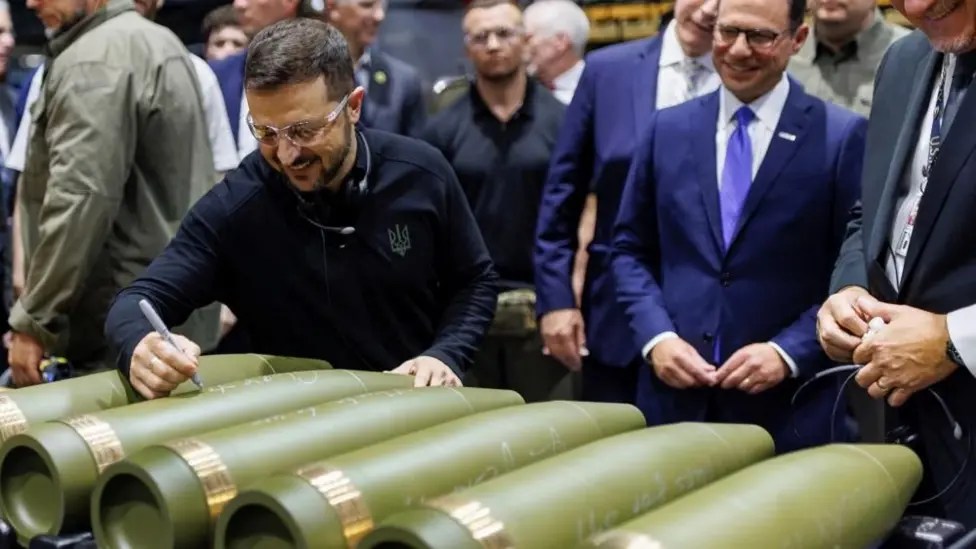
23 September, 2024. As a retired senior military officers pointed out recently, the unrestricted use of the UK’s Storm Shadow long-range missiles will not turn the tide of war in favour of President Zelensky and Ukraine.
That view is undoubtedly correct. But it is also missing the main point.
Ukraine’s ability to use Storm Shadow to prosecute depth targets, is partly symbolic, signifying continuing western support, but also a military necessity that sits at the heart of Zelensky’s plan to settle the conflict on his terms – to deliver a peace deal that he and his nation can live with.
He needs Storm Shadow to demonstrate that the west is still in his corner and prepared to risk Putin’s ire in order to provide support. He also needs it to demonstrate to Russian people who may think they are safe, well behind the fighting front, that he has the means to give them a taste of what Ukrainians have been living with for over two years.
Of course, any agreement on the use of the missiles is bound to include a clause that prevents them from being used to directly target civilians. However, by taking out military targets well inside Russian territory, in places the local inhabitants thought were relatively safe, he could ramp up public disquiet about how the Kremlin is prosecuting the conflict.
But mostly he needs our long-range weapons to help him to hold on to the Kursk bulge.
As Russia began a counter-offensive in Kursk, Zelensky said recently (Washington Post): “Anyone who simply looks at the map and sees where Russia is launching strikes, where it is preparing forces and holding reserves, where its military facilities are located, and what logistics it uses — anyone who sees all of this clearly understands why Ukraine needs long-range capabilities.”
Although Ukrainian generals undoubtedly hoped the Kursk attack would help to relieve pressure further south in Donetsk by forcing Russia to redeploy resources to halt the advance, it is becoming clear that the real strategic objective was to create a bargaining chip that Zelensky can use when he eventually sits down to play peace poker with Putin.
Zelensky is nobody’s fool. He knows, that even with western backing, it is almost impossible for him to achieve an outright military victory. Peace, when it comes, will be the result of a negotiation rather than the defeat of Russia on the battlefield.
The worst-case scenario for the Ukrainian leader right now is that Donald Trump wins the US Presidential election in November, stops the flow of American arms and ammunition, and forces Ukraine to accept a humiliating armistice pending a final settlement.
If that happened, it is certain that Putin would demand to keep what he holds. That would be personally and politically impossible for Zelensky and without the Russian territory he has captured at Kursk, he would have little to trade. So, he needs to hold on to it until he is able to look Putin in the eye across the negotiating table.
Zelensky has developed a four-point peace plan that he intends brief to Whitehouse hopefuls, Harris and Trump when he attends the UN General Assembly in New York later this month. The world will be watching with bated breath.
But in the meantime, the UK and the USA must give him the go-ahead to use Storm Shadow, and, ideally, ATACMS too.
 As I See It...