
My Books
Shamrocks Among The Poppies
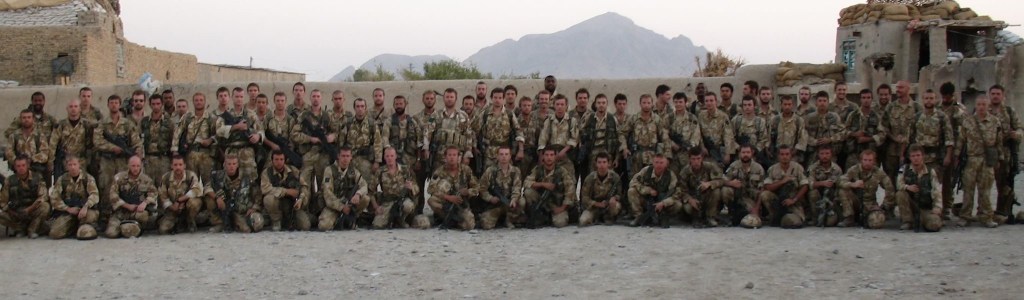
Due to be published in the summer of 2025. During late summer and early autumn of 2006, 56 soldiers from the 1st Battalion, the Royal Irish Regiment fought a life-or-death struggle against hundreds of Taliban insurgents for possession of a dusty, mud-brick compound in the town of Musa Qala in Afghanistan’s Helmand Province.
Surrounded, cut off, massively outnumbered, and down to their last few bullets and mortar rounds, this small band of British soldiers fought off repeated assaults by a well-armed, resolute enemy, determined to breach the walls and kill the garrison. The attacks came thick and fast, sometimes up to 10 individual attacks in a day. There were many occasions when only the firepower of Nato fast jets with their 1000lb bombs and depleted uranium-tipped cannon shells, kept the attackers from achieving their bloody goal.
Shamrocks Among The Poppies is the story of this latter-day Band of Brothers, told through the eyes and the voices of the men who were there. It is a soldiers-eye view of the horrific and intense fighting that took place in that part of Northern Helmand as the British Task Force tried – and failed – to bolster the position of the Afghan government and the provincial governor.
To understand why this small band of soldiers found themselves fighting for their lives in a remote outpost, the book describes the links between British Prime Minister, Tony Blair’s, relationship with his American allies, Bill Clinton and later George W Bush; the ill-fated and politically-toxic invasion of Iraq; and how these factors influenced the decision to re-invest in Afghanistan in 2006. It also explains how, in the face of a clearly-resurgent Taliban insurgency, the politicians and senior military advisors contrived to despatch such an under-sized and poorly-supplied force, numbering just 3500 souls, to secure a province three times the size of Wales.
The troops who steadfastly held their ground in the face of a growing and increasingly desperate insurgency, overcame many difficulties during their time in the compound. They lost three of their number to Taliban fire and many more were wounded. But one thing they could not overcome was the inability of the British commanders to extract them from the siege, evacuate their wounded, or replenish their dwindling supplies of ammunition and food. Eventually, the local Tribal Elders brokered a deal that stopped the fighting and allowed the garrison to be transported out of the town in a convoy of Afghan trucks.
Over the following months and years, the physical wounds healed, but the psychological damage did not. Today, many of the soldiers who fought at Musa Qala continue to suffer from the trauma of their experiences, diagnosed with Post Traumatic Stress Order and other mental illnesses. A significant number of them found they were unable to keep on fighting their demons and chose to end their torture by their own hands. The book concludes with a vivid and painful description of the true consequences of high-intensity combat in terms of its mental scars, and the abysmal efforts of the government to provide adequate care for those who put everything on the line for their country.
A Brilliant Little Victory
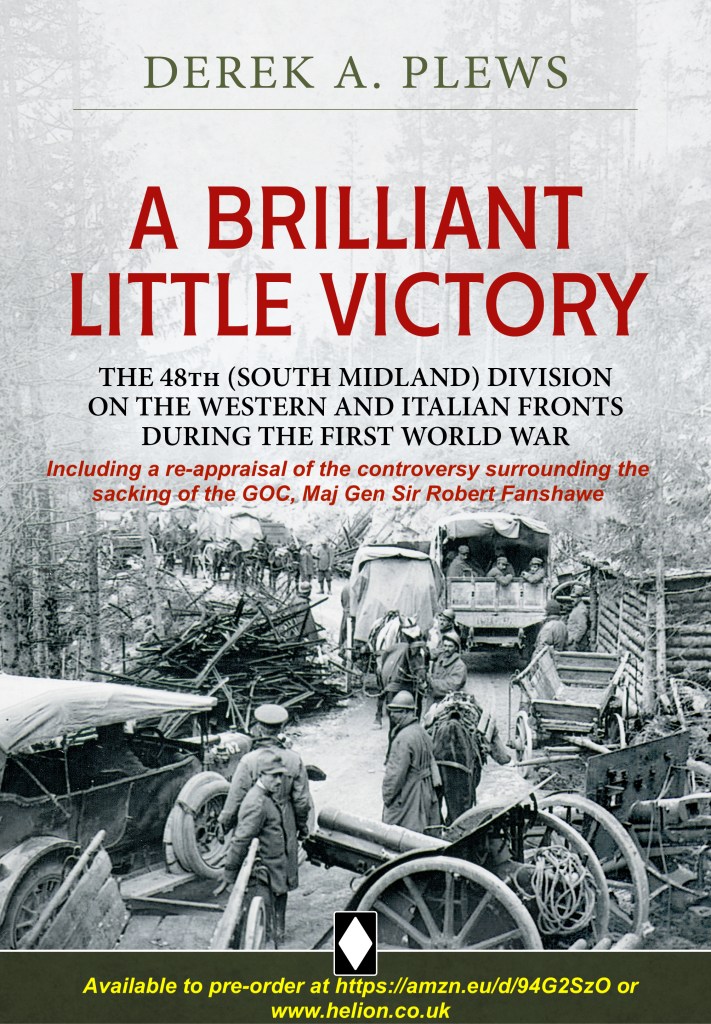
Published in April, 2024, A Brilliant Little Victory tells the story of the 48th (South Midland) Division during the First World War.
As well as taking the reader through the Division’s experiences at the Battle of the Somme, the Pursuit to the Hindenburg Line, and the Battle of Passchendaele, it includes a reappraisal of the sacking of the formation’s long-serving GOC, Maj General Sir Robert Fanshawe, in Italy in 1918.
Available at Amazon or through the publisher, Helion Books.
 As I See It...