


Politics
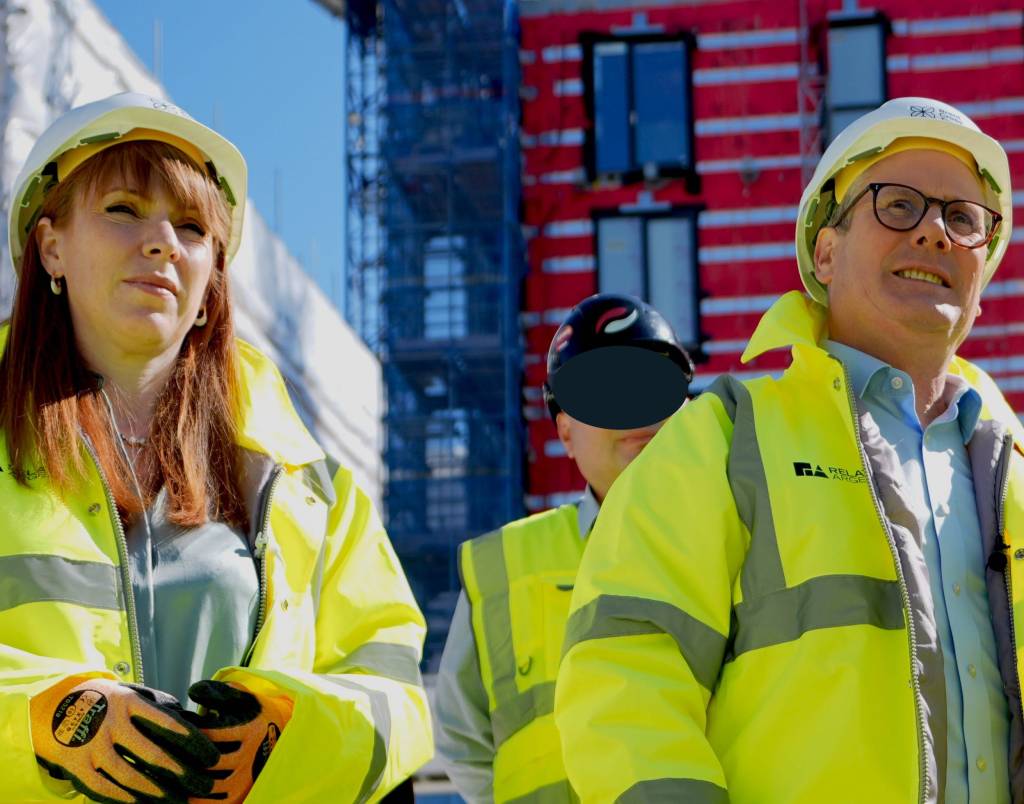
Labour created the Green Belt…now they’re going to build on it.
Clement Attlee’s post-war Labour government introduced the Green Belt as a national policy in the Town and Country Planning Act of 1947.
Now his successor, Keir Starmer, and Deputy Prime Minister, Angela Rayner, are going to build on it.
The Green Belt was created as a buffer – between towns and the countryside – and as a planning tool to prevent urban sprawl by restricting development to built-up areas.
However, in her new National Planning Policy Framework (NPPF), Ms Rayner is taking off the brakes and allowing developers to bulldoze our green spaces to build more new homes, mainly in the South-East, where demand is the greatest.
The revised NPPF will include a new concept of Grey Belt land, which Rayner defines as sites in the Green Belt, on the fringe of existing settlements, that may have been previously developed – eg the sites of deserted petrol stations, or hard-standings where agricultural buildings may have once stood – and could also include virgin farmland and other undeveloped open spaces.
Clearly, having a roof over one’s head is a basic human right, and there is, it is argued, a need for more house-building to provide homes for a growing population. But let us take a look at the population statistics.
In the year to mid-2023, according to government figures, there were 16,300 more deaths than births across the UK. On that basis, the population should be falling. However, the same set of statistics show that overall, the population increased by 1 per cent over the same period. If there were more deaths than births, what could be driving the increase? The answer, according to the Office for National Statistics, is net international migration.
As TV presenter, Trevor Philips, pointed out to Rayner recently, five out of seven of the 1.5m new homes to be built by Labour will go to immigrants. Many will feel the correct policy response is to get a grip on uncontrolled, illegal immigration rather than concreting over the countryside.
In her interview with Philips, Rayner first claimed that more housebuilding was necessary to meet the country’s housing shortage. In the same interview, when challenged with the statistic about the proportion of new houses that would go to immigrants, she said there was no shortage of houses. She cannot have it both ways.
But here’s an interesting fact about housing supply.
Rayner’s own department’s English Housing Survey, estimated that in 2022 there were 1.139m vacant dwellings in England. Other statistics from her department show thousands of long-term vacant homes across the country. Many of these – 38,000 – were in London, with a further 36,000 in the South East and 38,000 in the North West, 29,000 in Yorkshire and Humberside, 28,000 each in the West Midlands and Eastern England.
So, before she unleashes the bulldozers, perhaps Rayner should work with her cabinet colleagues to see that the current stock is filled ahead of embarking on the destruction of swathes of England’s green and pleasant land.
That might mean persuading Chancellor Rachael Reeves to provide the money necessary to bring run-down housing stock back into occupancy, or getting Jonathan Reynolds (Business and Trade) to develop incentives to create jobs where there is existing housing. Or a bit of both.
Perhaps in Rayner’s vision of housing utopia, it is just less hassle to resort to new bricks and mortar rather than ensuring that existing empty homes are brought back into use?
In the meantime, Labour’s new planning framework is set to drive an earth-mover through local democracy.
In his recent “reset” speech, Keir Starmer threw a punch at what he called “nimbys, naysayers and blockers” who he accused to holding up development.
But, here’s the thing. People don’t just object to housebuilding because it might spoil the view from their rear gardens. Locals often wave a red card at planning applications because they fear these developments will damage the environment and wildlife and put additional pressure on already-overwhelmed local services. More houses mean a requirement for more GP surgeries, school and pre-school places, dentists, hospital beds, road space, flood-prevention measures, public transport, leisure facilities, parks. These demands are rarely met in full.
One answer would be to adjust the existing “planning obligations” regulations to ensure that developers, who make significant financial gains from the increased land values that follow the granting of planning permission, are forced to contribute more to the cost of providing additional local services and infrastructure.
However, this is unlikely to happen. If the government was to enforce this requirement rigorously, and demand that the contribution meets a larger proportion of the costs, the house-builders would use it as an excuse to push up unit prices, thus impacting negatively on Labour’s affordability policy.
Instead, Rayner has introduced what she calls her “golden rules” which require developers to “contribute to necessary improvements to local and national infrastructure”, but only for major developments (more than 10 houses or sites of greater than 0.5ha in the Green Belt.
Governments of all political shades have for decades been grappling with the problem of how to ensure developers make a proper contribution to the critical infrastructure necessary to sustain new developments.
Developers are already required to make a contribution to infrastructure under Section 106 of the Town and Country Planning Act, and the Community Infrastructure Levy. However, the amount to be paid is rarely sufficient to cover the full cost, leaving hard-pressed local authorities – in reality local Council Tax payers – to find the difference.
Meanwhile, she will impose draconian housing targets on local authorities, irrespective of the views of the councils or the people they represent.
These targets will be based not on a rational, locally-informed assessment of local need, but a percentage of national housing stock, topped up to take account of relative affordability.
This means affluent areas where houses attract premium prices, will be forced to accept additional numbers in a bid to increase supply and drive down prices. Less desirable areas will have reduced targets, reflecting lower demand. This is likely to mean predominantly Tory-voting regions will be penalised while Labour areas will get off relatively lightly.
While this is happening, Rayner’s cabinet colleague, the climate-change Czar, Ed Miliband, has hinted that he will declare developments such as windfarms to be “Critical National Infrastructure”, allowing him to overrule local planning decisions.
In both cases, this top-down approach will undermine the concept of localism, and call into question one of the main planks of local government. Will there be any point in councils having planning departments if targets are going to be imposed by the centre and national regulations skew the system even further in favour of the developers?

Why is Starmer so useless…?
5 October, 2024. The Prime Minister had an opportunity to kill this story yesterday. When asked by journalists on video to confirm that Labour had no plans to hand over the Falkland Islands to Argentina he ignored the question and repeated his drivel justifying the decision on handing the Chagos Islands to Mauritius.
This sparked a damage limitation exercise by the No 10 Press Office who said later: “The sovereignty of the Falklands is not up for debate.”
But if that is really the case, why didn’t Starmer just say so when asked. Either the Press Office claim is untrue or Starmer, despite being a former barrister, is just not smart enough, or quick thinking enough, to recognise how damaging his silence would be. I’m not sure which of these possible explanations I believe or, indeed, which I prefer. Neither is is particularly appetising.
Local democracy is dead
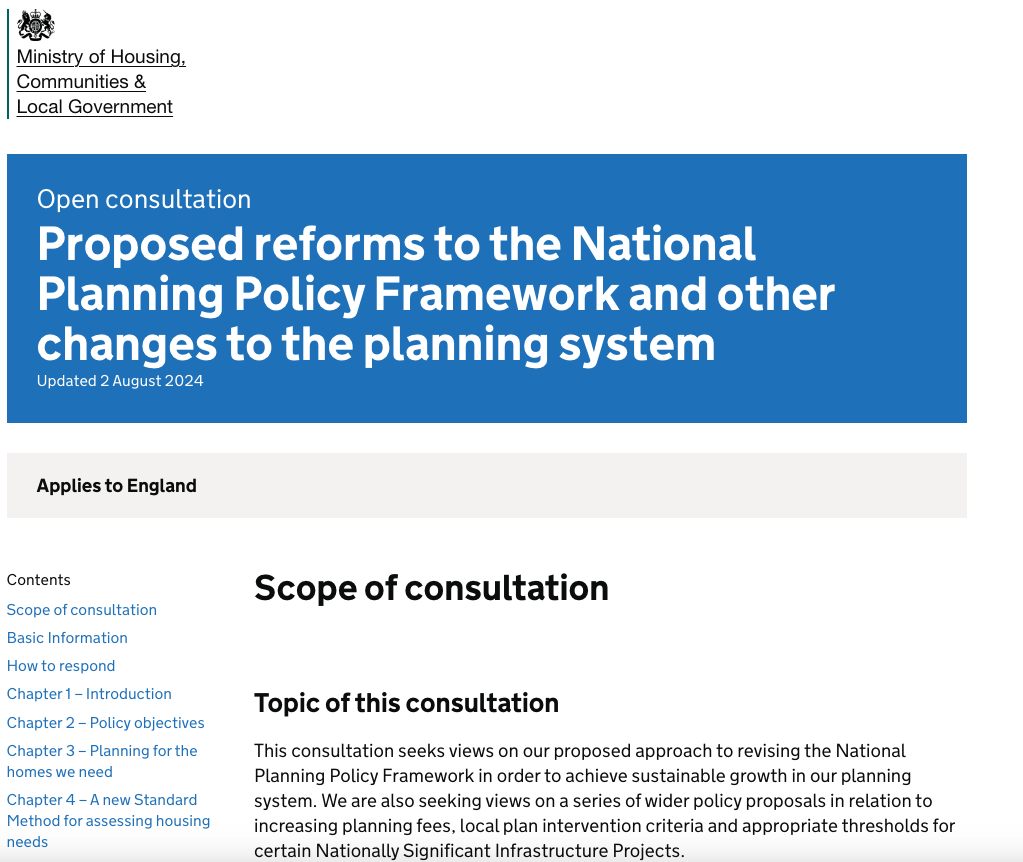
23 September, 2024. Local democracy is dead and buried. The final nail in the coffin is Deputy Prime Minister, Angela Rayner’s proposed National Planning Policy Framework, which, if put into operation will mean local councillors will have no real say in how the plan to meet housing need in the country.
And as a result, the rural landscape of southern England will be ravaged by Rayner’s house-building obsession and in many places our “green and pleasant land” will disappear under a mantle of bricks and mortar – changed forever at the whim of Whitehall.
There is a need for more house-building, but the burden of this, in terms of its impact on our green spaces, should be shared across the country equally – not forced on the south-east, in areas where the people may have a different political outlook from the party in Government.
Large tracts of the north are suffering from housing market failure, mainly as a result of poor economic performance. There is no work so there is no demand for housing. Street after street of dwellings stand vacant, falling into disrepair. If Rayner really wants to make a difference she should join forces with her colleague, Jonathan Reynolds, the Business Secretary, to spread prosperity beyond the south-east, and help to address the failures that have turned previously vibrant communities into wastelands.
In Buckinghamshire this week, the Conservative group on the council put forward a motion accusing the Deputy Prime Minister of bringing forward proposals that would deliberately transfer housing targets from areas with a Labour majority, such as Luton and Slough to Conservative areas such as Bucks.
At the same time, the Council’s Cabinet agreed the text of a formal response to the proposed National Planning Policy Framework, pointing out the following:
- The proposed changes to the way in which local housing need was to be calculated, would lead to a 42% increase in the figure for Buckinghamshire;
- The proposed changes to Green Belt policy, particularly a new definition of ‘grey belt’ land had the potential to lead to large-scale sporadic developments across a wide area of the Buckinghamshire Green Belt;
- The proposed changes to the requirements relating to maintaining a five year supply of housing land were likely to lead to more speculative planning applications being granted permission; and
- The lack of a strategic approach to funding and providing essential local infrastructure when existing facilities were already overwhelmed.
Of these, perhaps the two biggest issues are the effect of the new proposals for calculating housing need, and the lack of essential local infrastructure to support the corresponding increase in population.
The Government’s approach will increase the mandatory housing target for the county from 61,152 dwellings to 86,562 houses by 2045. Where are the roads, the schools, the GP surgeries, the hospital beds, the school places that will be needed to cope with the people who will live in these new houses?
In contrast, the mandatory targets for Luton and Slough – both Labour strongholds – have decreased. Do these towns areas have less housing demand than Bucks?
Local authorities have been given until 24 September to respond to the proposals, after which Rayner will publish a final version of her new Planning Policy Framework, before the end of the year, and will require councils to follow it to the letter. Do not hold your breath waiting for her to accept Buckinghamshire Council’s proposed amendments.
Local democracy has been under threat from the actions of successive governments. But this latest raid, which the Government claims is about “fixing the foundations of the economy”, is simply another measure to undermine councils and the people who vote for them, creating a democratic deficit. There will soon be no point in voting for your local councillor because they will be powerless in the face of increasing regulation from central government.
Angela Rayner should be honest with the public and formally remove planning decision-making from local authorities in favour of her Ministry of Housing and Local Government. Instead, she prefers to do it by stealth, hoping the people won’t notice, and retaining her ability to blame local authorities when her grandiose plans end in failure.
A free media is fundamental to democracy
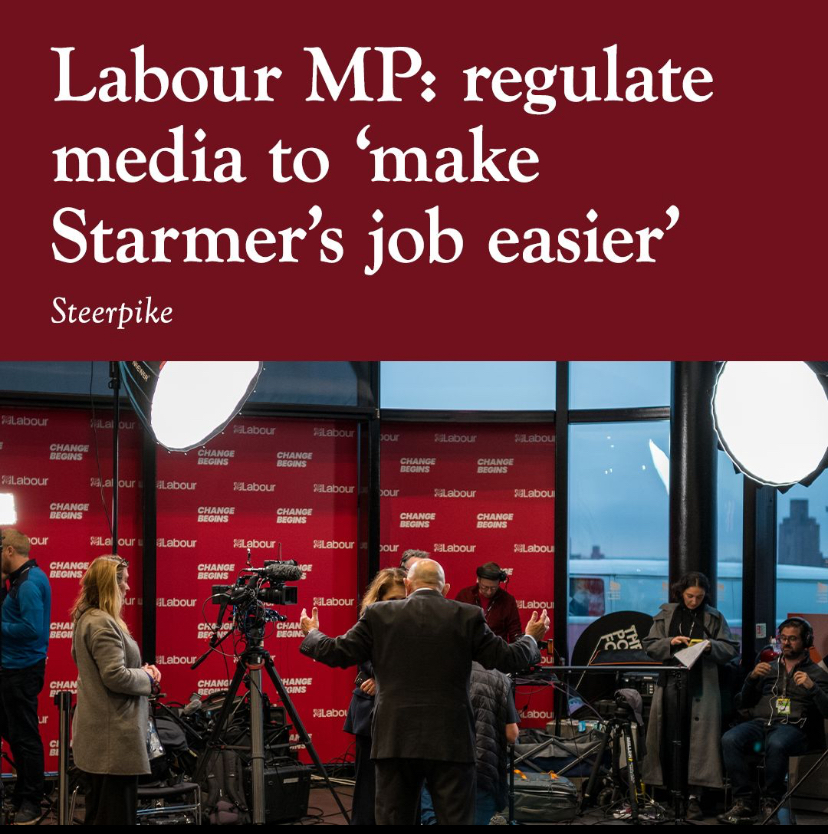
23 September, 2024. So, according to The Spectator, the Labour MP for Clapham and Brixton Hill, one Bell Ribeiro-Addy, thinks all her party’s woes could be solved if only the media were properly regulated. Read it for yourself here.
Speaking at a fringe event in Liverpool, she apparently said:
“It’s in the Labour Party’s interest and in the Labour movement’s long-term interest to regulate the media properly instead of making short term pacts and truces – and if it’s done right media reform could actually make Keir Starmer’s job a lot easier, and effective media reforms would make effective government much easier.”
When I first read these words, which could suggest encouragement for a government clamp-down on media freedom, I was inclined to dismiss them as the usual far-left claptrap that is spewed out at Conference fringe meetings: the sort of stuff that raises a cheer from the quasi-communist wing of the Labour Party, but would never make it through the National Policy Forum of any sane, democratic political organisation.
But then I read the text of Keir Starmer’s conference speech, in which the word ‘control’ appeared 13 times. At last year’s party conference, when he had an election to win and an electorate to hood-wink, Starmer was all about how politics should “tread lightly on people’s lives”. This year, he is asserting that people want “more control…”.
Suddenly, the idea of political restrictions on media output didn’t seem quite so unlikely under a Labour Government. After all, if they are prepared to incur the wrath of the people by cutting the Winter Fuel Allowance to all but a few of the poorest in society, and denying it to millions whose income is just above the cut-off point, why wouldn’t they be up for taking on the media?
Freedom is not free. It comes with responsibilities. And sometimes our media outlets forget that important point. They take sides and play favourites. They often lack objectivity and proportionality. They get things wrong and are reluctant to admit their errors. They distort or block government’s messaging in favour of their own narratives. And they like to think they hold our politicians to account, on behalf of a grateful nation. Perhaps they do.
But on the other hand, they champion important causes and force organisations and governments to change tack, usually for the better. They stand up for the little people against bullying corporate or state giants. They can make us laugh or cry, or do both at the same time, as they expose human weaknesses and strengths, personal tragedies and triumphs. They write the first draft of history, although, like all first drafts, their accounts may be subject to later revision. But at least they were there when history was being made.
Those of us who have had to work with them over the years can testify that the mainstream media can be a right royal pain in the rear. Politicians’ frustrations are understandable.
But the answer is not more regulation. The solution is for governments to raise their communications game. That means developing a better understanding of the beast they are dealing with, what makes it tick, the best way to get it to roll over for a belly-scratch, and how to feed it without losing their fingers. In other words, they need to work out how to work more effectively to achieve mutual benefits, accepting that the beast keeps all its teeth and may still bite from time to time? It is that freedom to gnaw at the hand that feeds it that ensures credibility and makes the media such an important institution and such a powerful communications tool.
For all their faults and transgressions, it is surely better to live in a society where journalists are free to challenge and criticise those in power, rather than, for example, in Putin’s Russia, where media outlets are obliged to tell only the State’s version of the “truth” and the people are fed a constant diet of propaganda soup?
 As I See It...